
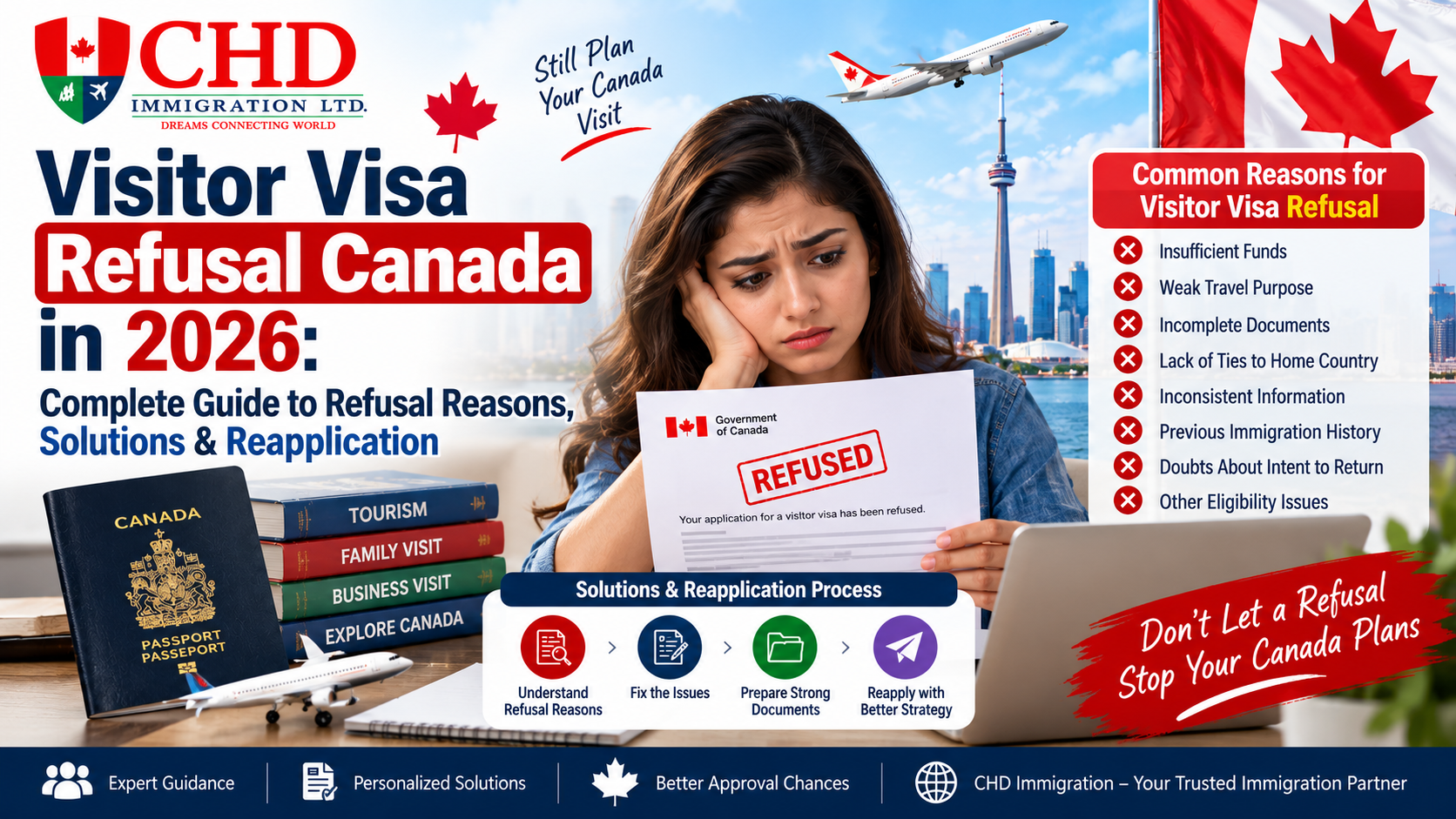
Receiving a Visitor Visa Refusal Canada decision can be frustrating and disappointing, especially when you have invested time, money, and effort into your application. Many applicants assume a refusal means they can never visit Canada, but that is not true. In most cases, understanding the refusal reasons and correcting the issues can significantly improve your chances of approval in a future application.
A Canada Visitor Visa Refusal typically occurs when an immigration officer is not satisfied that the applicant meets the requirements of a Temporary Resident Visa (TRV). The officer must be convinced that the applicant will leave Canada at the end of their authorized stay, has sufficient funds, and has a genuine purpose for travel.
This comprehensive guide by CHD Immigration explains the most common refusal reasons, how to analyze your refusal letter, and the best strategies to strengthen your next application.
What is a Visitor Visa Refusal Canada?
A Visitor Visa Refusal Canada occurs when Immigration, Refugees and Citizenship Canada (IRCC) determines that an applicant does not meet the requirements for temporary entry into Canada.
A refusal does not necessarily mean that you are permanently ineligible. Instead, it indicates that the immigration officer was not fully satisfied with the information or supporting documents provided in your application.
Common visa categories affected include:
- Canada Tourist Visa
- Family Visit Visa
- Business Visitor Visa
- Temporary Resident Visa Canada (TRV)
Why Does Canada Visitor Visa Refusal Happen?
Every Canada Visitor Visa Refusal is based on specific concerns identified by the visa officer.
The most important question officers evaluate is:
“Will the applicant leave Canada at the end of their authorized stay?”
If sufficient evidence is not provided, the application may be refused.
Top Visitor Visa Refusal Reasons Canada in 2026
Understanding the most common Visitor Visa Refusal Reasons Canada can help applicants avoid mistakes and prepare stronger applications.
1. Weak Home Country Ties
This is one of the leading reasons for refusal.
Visa officers want to see evidence that you have strong reasons to return home after your trip.
Examples include:
- Stable employment
- Business ownership
- Property ownership
- Family responsibilities
- Educational commitments
Applicants with limited ties often face greater scrutiny.
2. Insufficient Financial Support
Applicants must demonstrate that they can afford:
- Airfare
- Accommodation
- Daily expenses
- Emergency costs
Insufficient bank balances or unexplained deposits may raise concerns.
3. Unclear Purpose of Visit
A vague travel purpose often leads to Canada Tourist Visa Refusal.
Your application should clearly explain:
- Why you are visiting Canada
- How long you plan to stay
- Where you will stay
- What activities you plan to undertake
Detailed itineraries and supporting documents strengthen your application.
4. Limited Travel History
Applicants with little or no international travel history may find it harder to demonstrate compliance with immigration laws.
Travel history helps officers assess whether applicants respect visa conditions.
5. Incomplete Documentation
Missing documents remain one of the most common causes of Visitor Visa Rejection Canada.
Examples include:
- Missing financial records
- Missing employment letters
- Incomplete forms
- Missing invitation letters
Even small documentation errors can affect the outcome.
6. Previous Immigration Issues
Past immigration violations may impact future applications.
Examples include:
- Visa overstays
- Deportation orders
- Previous refusals
- Failure to comply with immigration conditions
These issues often require additional explanation and supporting evidence.
7. Misrepresentation
Providing false information or submitting fraudulent documents can lead to serious consequences.
Misrepresentation is among the most severe immigration concerns and can affect future applications.
Understanding Your Visitor Visa Refusal Letter Canada
After a refusal, IRCC issues a Visitor Visa Refusal Letter Canada outlining the reasons for the decision.
The refusal letter typically contains general categories such as:
- Travel history
- Financial situation
- Purpose of visit
- Family ties
- Employment status
Many applicants misunderstand these refusal letters because they provide only a summary of the officer’s concerns. Additional officer notes may provide greater detail regarding the decision.
Understanding the exact refusal reason is critical before submitting a new application.
Canada Visitor Visa Rejected: What Should You Do Next?
If your Canada Visitor Visa Rejected notification arrives, avoid rushing into a new application.
Instead:
Review the Refusal Letter
Carefully analyze the officer’s concerns.
Identify Weak Areas
Determine which parts of your application require improvement.
Strengthen Supporting Documents
Gather stronger evidence related to:
- Employment
- Finances
- Family ties
- Travel plans
Seek Professional Advice
Complex refusal cases often benefit from expert review.
Taking the time to address the refusal properly can significantly improve future outcomes.
Reapply After Visitor Visa Refusal: Step-by-Step Process
Many applicants successfully Reapply After Visitor Visa Refusal once deficiencies are corrected.
Step 1: Understand the Refusal Reason
Never submit the same application again without changes.
Step 2: Address the Officer’s Concerns
Provide stronger evidence directly related to the refusal grounds.
Step 3: Update Your Documentation
Submit:
- Updated bank statements
- New employment records
- Additional travel plans
- Stronger invitation letters
Step 4: Prepare a Detailed Cover Letter
Explain:
- Previous refusal
- Improvements made
- Purpose of travel
- Return plans
Step 5: Submit a Stronger Application
A well-prepared application often has a better chance of approval. IRCC specifically notes that reapplying with the same information is unlikely to change the decision unless new information or circumstances address the refusal reasons.
Visitor Visa Refusal Solution: How to Improve Approval Chances
A proper Visitor Visa Refusal Solution focuses on addressing the exact concerns raised by the immigration officer.
Recommended strategies include:
- Demonstrating stronger home-country ties
- Showing stable employment
- Providing consistent financial records
- Creating a detailed travel itinerary
- Including supporting invitation letters
- Submitting a professional cover letter
- Ensuring complete documentation
The goal is to remove doubts and demonstrate that your visit is genuinely temporary.
Why Hire a Visitor Visa Refusal Consultant?
A qualified Visitor Visa Refusal Consultant can help identify weaknesses in your application and develop an effective reapplication strategy.
Professional assistance may help with:
- Refusal analysis
- Document review
- Eligibility assessment
- Cover letter preparation
- Reapplication strategy
- Application submission support
While no consultant can guarantee approval, expert guidance can help applicants submit stronger applications. IRCC service notes that simply hiring a representative does not automatically improve approval odds unless the underlying issues are addressed.
Why Choose CHD Immigration for Canada Visitor Visa Refusal Help?
If you need Canada Visitor Visa Refusal Help, CHD Immigration provides personalized assistance for refused applications.
Our services include:
Refusal Assessment
Detailed review of refusal reasons.
Reapplication Strategy
Customized plans designed to address officer concerns.
Documentation Support
Assistance with collecting and organizing supporting evidence.
Cover Letter Preparation
Professional explanations tailored to your case.
End-to-End Guidance
Support throughout the entire reapplication process.
Our team works closely with applicants to build stronger cases and improve approval opportunities.
Internal Immigration Services You May Also Need
Many applicants researching visitor visa refusals are also interested in:
- Apply Visitor Visa Canada
- Visitor Visa Extension Canada
- Super Visa Canada
- Canada Study Permit
- Canada Work Permit
- LMIA Work Permit Canada
- Express Entry Canada
- Provincial Nominee Program (PNP)
- Permanent Residence Canada
- Immigration Consultant Surrey
These topics create excellent internal linking opportunities throughout your website.
Final Thoughts
A Visitor Visa Refusal Canada can be discouraging, but it does not mean your Canadian travel plans are over. Most refusals happen because immigration officers need stronger evidence regarding your finances, travel purpose, home-country ties, or overall application credibility.
By carefully reviewing your refusal letter, correcting weaknesses, and preparing a stronger application, you may significantly improve your chances when you Reapply After Visitor Visa Refusal.
For professional Canada Visitor Visa Refusal Help, contact CHD Immigration and receive expert guidance tailored to your specific case.
Frequently Asked Questions (FAQs)
Q1. What are the most common Visitor Visa Refusal Reasons Canada?
Ans. The most common reasons include weak home-country ties, insufficient funds, unclear travel purpose, incomplete documentation, and limited travel history.
Q2. Can I reapply after a Canada Visitor Visa Refusal?
Ans. Yes. You can reapply after addressing the concerns mentioned in your refusal letter and providing stronger supporting evidence.
Q3. How soon can I reapply after a visitor visa refusal?
Ans. There is no mandatory waiting period. However, you should only reapply once you have resolved the issues that caused the refusal.
Q4. Does a Canada Tourist Visa Refusal affect future applications?
Ans. A refusal remains part of your immigration history, but it does not automatically prevent future approvals if you submit a stronger application.
Q5. Can a Visitor Visa Refusal Consultant guarantee approval?
Ans. No consultant can guarantee approval. However, an experienced consultant can help identify weaknesses and improve the quality of your application.