
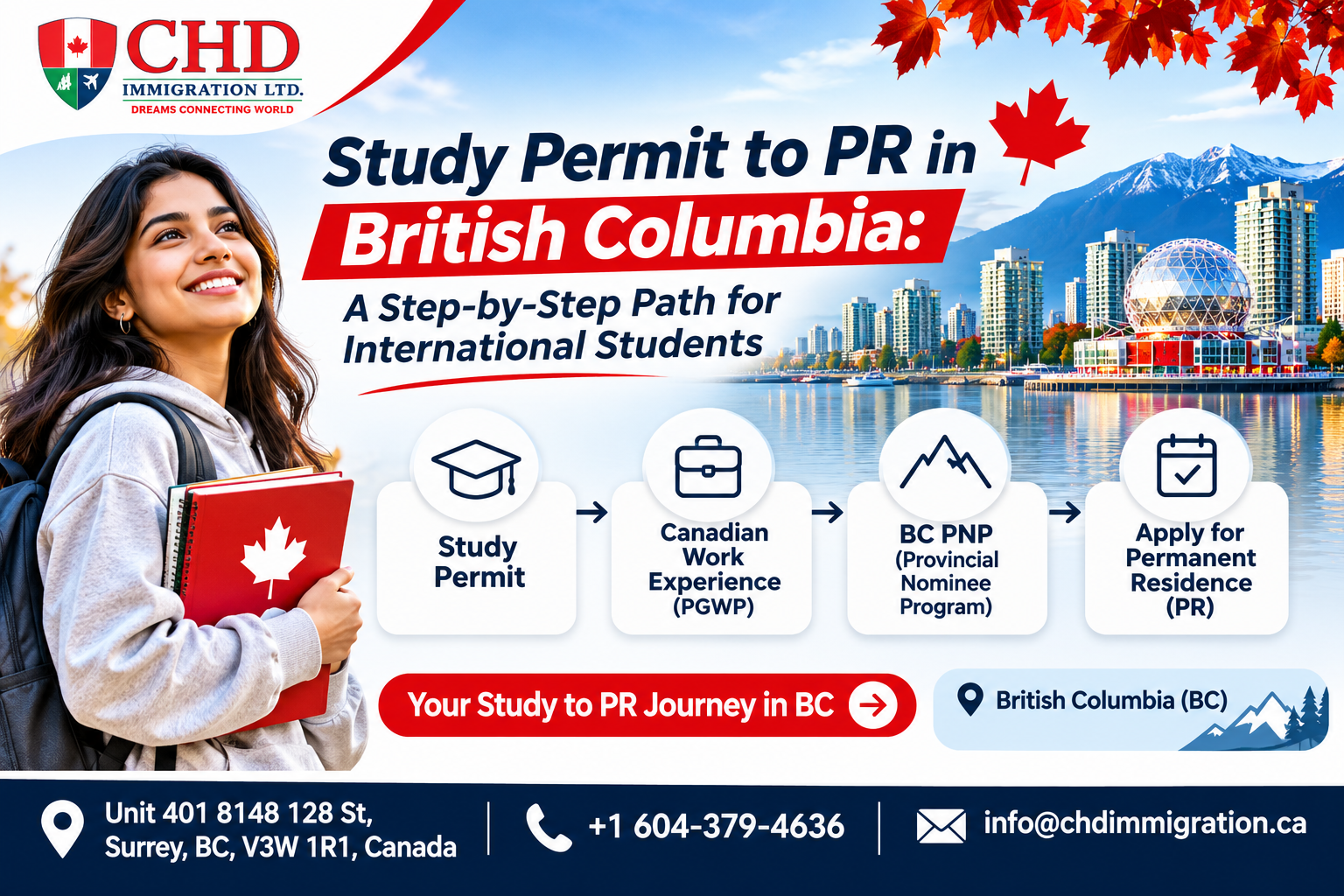
Short answer: the usual path is study permit, then a post-graduation work permit, then skilled work experience in Canada, then a permanent residence application through Express Entry or the BC Provincial Nominee Program. Each step has its own conditions, and the choices you make as a student affect the later steps.
British Columbia has a large international student population, especially in Vancouver, Burnaby and Surrey. Many of those students plan to stay. This guide sets out the order of the steps and where students most often go wrong.
Step 1: Keep Your Study Permit Conditions
Your later options depend on a clean study history. Stay enrolled, make progress in your program, respect the work-hour rules for students, and apply to extend your study permit before it expires. A gap in status or unauthorized work can affect a post-graduation work permit and a PR application years later.
Step 2: Apply for a Post-Graduation Work Permit
A post-graduation work permit (PGWP) is an open work permit for graduates of eligible programs at eligible schools. Its length depends on the length of your program. There is a fixed window to apply after you complete your studies, and you can normally receive a PGWP only once.
The eligibility rules for the PGWP have changed in recent years, including which programs qualify and what language results are needed. Check the current requirements for your program before you graduate, not after.
Step 3: Build Skilled Canadian Work Experience
Most PR routes for graduates need skilled work experience. What counts as skilled depends on how your job is classified under the National Occupational Classification, so the job title alone is not enough: the duties you actually perform must match. Keep your employment letters, pay stubs and tax documents from the first day.
Step 4: Choose Your PR Route
- Canadian Experience Class: for people with at least one year of skilled work experience in Canada. It runs through Express Entry, where candidates are ranked by points.
- BC Provincial Nominee Program: BC PNP has options for workers and graduates, often based on a job offer from a BC employer. A nomination adds a large number of points to an Express Entry profile.
Many graduates qualify to be assessed under both, and using them together is often the fastest route.
Step 5: Improve Your Score While You Work
Language test results carry significant weight in Express Entry. Retaking a test to reach a higher level, gaining another year of experience, or completing an additional credential can each raise your ranking. Plan these early, because your work permit has an end date.
Mistakes That Cost Graduates Their Chance
- Applying for the PGWP late or with an expired study permit.
- Working in a job that does not count as skilled for the PR program they are aiming at.
- Waiting until the last months of the work permit to look at PR options.
- Reference letters that do not describe duties, hours and pay.
Frequently Asked Questions
Can I apply for PR directly after graduating?
Usually not without work experience, although some provincial options exist for certain graduates. Most people need at least a year of skilled work first.
Can my spouse work while I study?
Some spouses of students qualify for an open work permit, depending on the program of study. The rules have been tightened, so check your case against the current policy.
What if my work permit will expire before I get PR?
There are options in some situations, such as a bridging open work permit once a PR application is in process. These depend on timing, so get advice well before the expiry date.
CHD Immigration helps students in Burnaby, Vancouver and Surrey plan this path from the study permit onward. Try the free Immigration Pathway Finder to see where you stand.